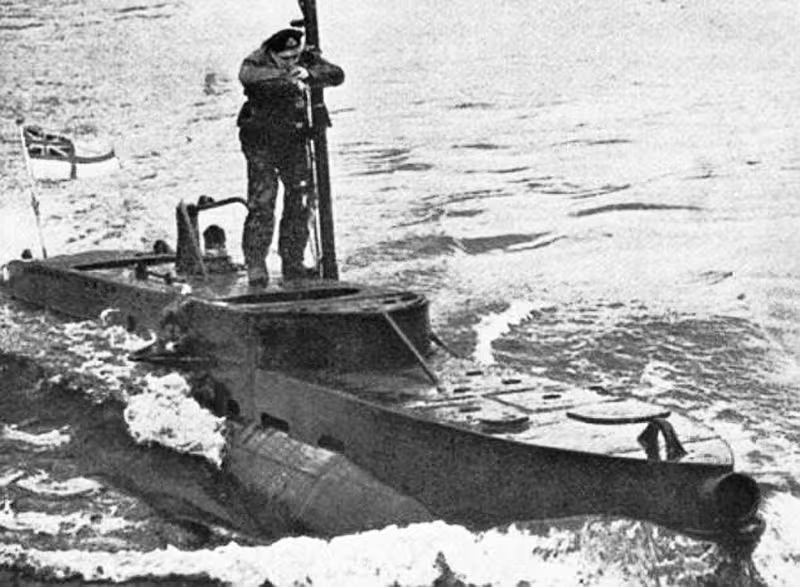
HMS X10, unofficially nicknamed Excalibur, was one of the Royal Navy's World War II X-class midget submarines (X-Craft). These small submarines were designed for daring attacks against heavily defended German warships anchored in Norwegian fjords.
Construction
- Built by Vickers-Armstrong at Barrow-in-Furness.
- Completed on 8 February 1943.
- Part of the X-class program developed specifically to attack major German naval units such as Tirpitz, Scharnhorst, and Lützow.
Operation Source
X10's most important mission was participation in Operation Source in September 1943. This was a secret Royal Navy operation in which several X-Craft were towed from Scotland to northern Norway to attack German capital ships sheltered in Kåfjord.
X10's assigned target was the battleship Scharnhorst. On 12 September 1943, she left Loch Cairnbawn under tow by the submarine HMS Sceptre. Near the target area, the operational crew took over and X10 proceeded toward Scharnhorst.
Failure of the Attack
Before X10 could carry out her attack, a fire in the periscope motor caused serious problems. Because of this equipment failure, the submarine was unable to complete the mission and had to withdraw without placing her explosive charges beneath Scharnhorst.
Loss of X10
After the aborted attack, X10 was taken under tow by HMS Stubborn. On 3 October 1943, the tow parted in rough weather, and controlling the small submarine became extremely difficult. With gale conditions worsening, orders were given that the craft could be scuttled if necessary. Later that day X10 was deliberately scuttled in the North Sea, ending her short career. No lives were lost.
Significance
Although X10 did not successfully attack Scharnhorst, she was part of the wider Operation Source effort. Other X-Craft successfully damaged the battleship Tirpitz, putting her out of action for months and demonstrating the effectiveness of midget submarines in special operations.