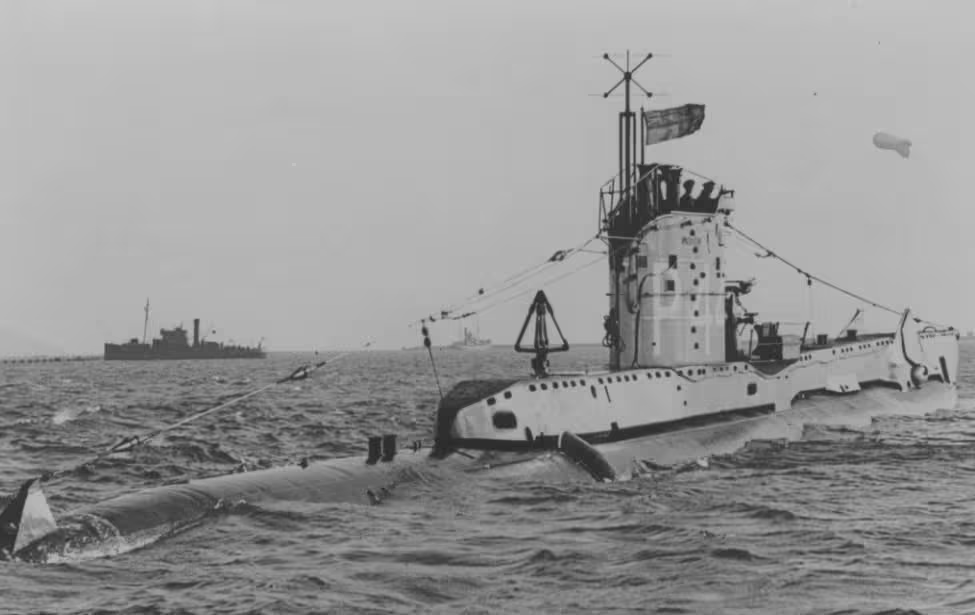
HMS Upholder (P37) was a Royal Navy U-class submarine that served during the Second World War. She became the most successful British submarine of the war and one of the most celebrated submarines in Royal Navy history.
Construction and Commissioning
Upholder was built by Vickers-Armstrongs at Barrow-in-Furness. Her keel was laid on 30 October 1939, she was launched on 8 July 1940, and commissioned into the Royal Navy on 31 October 1940. She carried the pennant number P37.
The submarine was one of the early U-class boats equipped with four internal bow torpedo tubes and two external bow tubes, giving her a heavier torpedo armament than later vessels of the class.
Command of Malcolm D. Wanklyn
Upholder's combat reputation is inseparable from her commanding officer, Lieutenant Commander Malcolm David Wanklyn. He commanded the submarine for virtually her entire operational career and became one of the most famous submarine commanders of the war.
Following training and work-up in British waters, Upholder sailed to Malta in December 1940 and joined the 10th Submarine Flotilla. From this base she attacked Axis shipping supplying German and Italian forces in North Africa.
Operations in the Mediterranean
Operating from Malta was extremely hazardous. Axis aircraft, destroyers, torpedo boats, and minefields made every patrol dangerous. Despite this, Upholder repeatedly penetrated heavily protected convoys. [en.wikipedia.org], [uboat.net]
Among her major successes were:
- The sinking of the Italian troopship Conte Rosso (17,879 tons) on 24 May 1941, causing heavy troop losses.
- Serious damage to the Italian cruiser Giuseppe Garibaldi in July 1941.
- The sinking of the large troopships Neptunia and Oceania on 18 September 1941.
- The destruction of numerous cargo ships, transports, submarines, and escort vessels carrying supplies to Axis forces in Libya.
For his outstanding leadership and daring attacks against heavily defended convoys, Wanklyn was awarded the Victoria Cross, Britain's highest award for gallantry.
Record of Success
During 24 completed war patrols, HMS Upholder sank approximately 93,000 tons of enemy shipping, including:
- One destroyer
- Two submarines
- An auxiliary minesweeper
- Multiple troopships
- Numerous merchant and cargo vessels
These achievements made her the most successful British submarine of the Second World War.
Her successes were especially significant because every ship sunk in the Mediterranean reduced the supplies reaching Axis armies fighting against British and Commonwealth forces in North Africa.
Loss of HMS Upholder
In April 1942, Upholder departed Malta on what was intended to be her final patrol before returning to Britain. She left on 6 April 1942 and failed to return. The submarine was declared lost with all hands. The exact cause of her loss remains uncertain. The leading theories are:
- She was sunk by depth charges from the Italian torpedo boat Pegaso after being detected near Tripoli on 14 April 1942.
- She struck a mine in the heavily mined waters off the North African coast.
Neither theory has been conclusively proven, and the wreck has not been positively identified.