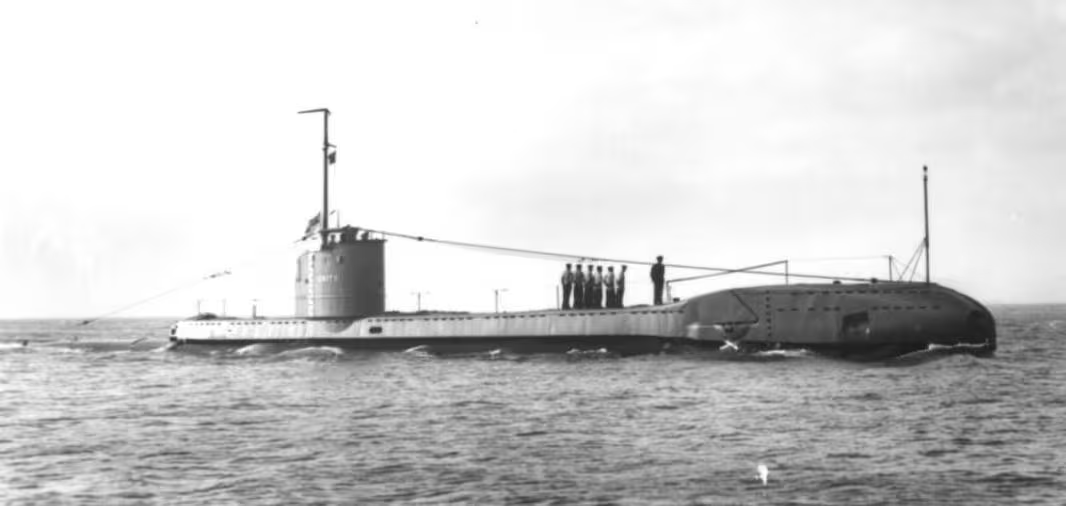
HMS Unity was a U-class submarine of the Royal Navy, built by Vickers-Armstrong at Barrow-in-Furness. She was laid down on 19 February 1937, launched on 16 February 1938, and commissioned on 5 October 1938. She was among the first submarines of the U-class, a design that would later become one of Britain's most successful wartime submarine types.
Early Service
At the outbreak of the Second World War, HMS Unity was assigned to the Royal Navy's 6th Submarine Flotilla, based at Dundee and later Blyth. She operated mainly in the North Sea, conducting patrols against German naval and merchant traffic.
During her war service, she carried out numerous patrols and made an unsuccessful attack on the German submarine U-2. On 25 March 1940, she rescued survivors from the Dutch fishing vessel Protinus, demonstrating the humanitarian role often undertaken by submarines during wartime.
Encounter with a German U-boat
On 11 April 1940, HMS Unity was detected in the North Sea by the German submarine U-5, commanded by Kapitänleutnant Lehmann. The German submarine fired torpedoes at Unity, but her crew spotted the torpedo track and executed a crash dive, successfully evading the attack. A second torpedo attack also failed, allowing Unity to escape unharmed.
Loss of HMS Unity
The submarine's career ended tragically on 29 April 1940. She departed Blyth to begin a patrol off Norway during the Norwegian Campaign. Visibility was extremely poor due to fog. As she cleared the harbour entrance, she collided with the Norwegian merchant ship Atle Jarl.
The collision was catastrophic. Atle Jarl struck the submarine, and HMS Unity sank within approximately five minutes. Most of the crew managed to escape, but two sailors, Lieutenant John Low and Able Seaman Henry Miller, sacrificed their lives by remaining in the flooded control room to help their shipmates reach safety.
Wreck and Legacy
The wreck of HMS Unity lies off the Farne Islands at depths between about 48 and 55 metres and is visited by experienced technical divers.
Although her wartime career lasted less than two years, HMS Unity is remembered for:
- Being one of the first operational Royal Navy U-class submarines.
- Conducting eight wartime patrols in the North Sea.
- Surviving a torpedo attack by U-5.
- The bravery of her crew during her loss in April 1940.
HMS Unity's story is one of the Royal Navy's lesser-known wartime submarine tragedies, with the vessel lost not to enemy action but to an accidental collision while heading out on patrol.