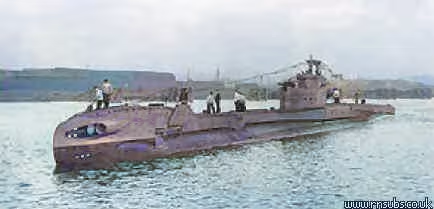
HMS Truculent (P315) was a Third Group T-class submarine of the Royal Navy. Built by Vickers-Armstrong at Barrow-in-Furness, she was laid down on 4 December 1941, launched on 12 September 1942, and commissioned on 31 December 1942.
Specifications
- Class: T-class submarine (Third Group)
- Pennant Number: P315
- Length: 276 ft 6 in (84.3 m)
- Crew: 61 (normal complement)
- Armament: 11 torpedo tubes, 4-inch deck gun, anti-aircraft machine guns
- Max Diving Depth: Approximately 300 ft (91 m)
Wartime Service (1943-1945)
Truculent spent much of the Second World War serving in both European and Far Eastern waters. She achieved notable success against Axis shipping and submarines.
Sinking of U-308
On her first war patrol in Norwegian waters, Truculent sank the German submarine U-308 with all hands lost aboard the German vessel.
Operation Source
In 1943, Truculent participated in Operation Source, towing the X-class midget submarine X-6 toward Norway as part of the attack on the German battleship Tirpitz and other major Kriegsmarine warships.
Service in the Far East
Transferred to the Pacific theatre, Truculent sank several Japanese vessels, including:
- Army cargo ship Yasushima Maru
- Coastal vessel Mantai
- "Hell Ship" Harugiku Maru
- Five Japanese sailing vessels
She also laid mines, one of which damaged the Japanese minelayer Hatsutaka.
By the end of the war, Truculent had sunk nine enemy vessels, making her one of the more successful British submarines of the conflict.
The Tragedy of January 1950
After surviving the war, Truculent remained in Royal Navy service.
On the evening of 12 January 1950, following post-refit trials from Chatham Dockyard, she was returning to Sheerness through the Thames Estuary. In addition to her crew, she was carrying extra dockyard workers, increasing the number of people aboard.
At about 7:00 pm, a vessel ahead was mistakenly identified. The ship was actually the Swedish tanker Divina. Before corrective action could be taken, the tanker struck Truculent. The collision fatally damaged the submarine.
Loss of Life
Many men survived the initial collision and escaped the submarine. However, freezing winter temperatures, darkness, strong currents, and mudflats in the Thames Estuary proved deadly.
- 64 men died
- 20 survived
- The casualty total was unusually high because additional dockyard workers were aboard.
Salvage and Aftermath
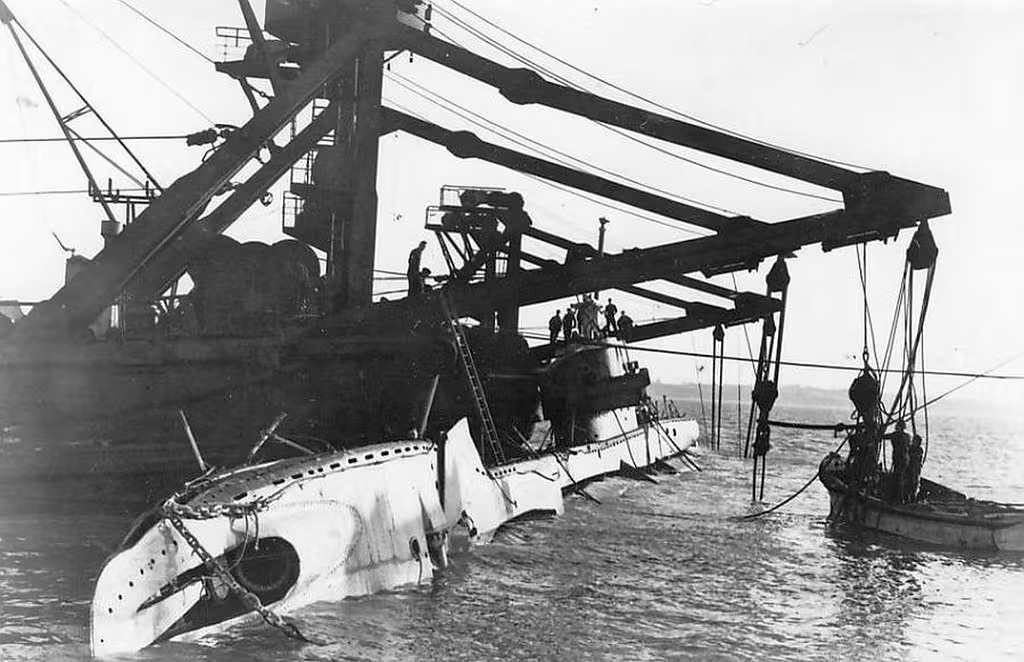
The wreck was raised in March 1950 and taken to Sheerness Dockyard. Following inspection, Truculent was declared beyond economical repair and sold for scrap.
The official inquiry apportioned blame:
- 75% to HMS Truculent
- 25% to the tanker Divina
Lasting Legacy: The "Truculent Light"
One important safety change resulted from the disaster. Investigators found that submarine navigation lights could be confusing to other vessels at night.
The Royal Navy subsequently introduced the "Truculent Light", an all-round white bow light fitted to submarines when operating on the surface. This additional light improved visibility and helped prevent similar accidents. Memorial
The Truculent disaster remains one of the Royal Navy's worst post-war submarine accidents. Memorial services continue to be held for the 64 men who lost their lives in the Thames Estuary on 12 January 1950.
Rescue and Salvage Scene
In Royal Navy submarine history, HMS Truculent is remembered both for her successful wartime service and for the tragic collision that led to important improvements in submarine navigation safety.