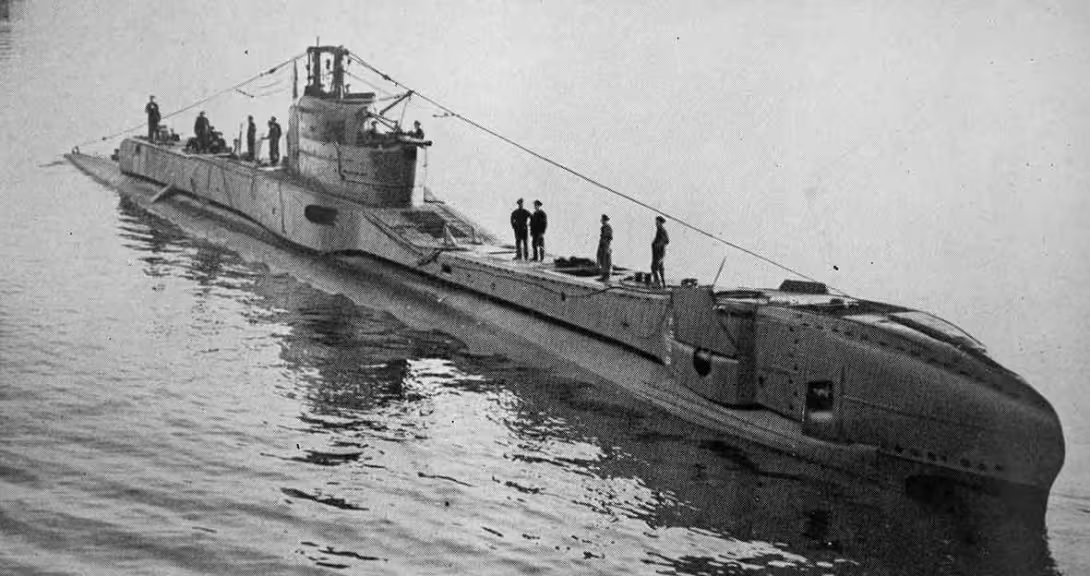
HMS Thunderbolt was one of the most famous and tragic submarines of the Royal Navy because she had previously been the submarine HMS Thetis, which suffered a catastrophic accident before the Second World War. See HMS Thetis for more information.
Salvage and Rebirth
Thetis was raised from the seabed, repaired, and thoroughly rebuilt. To avoid the stigma associated with the disaster, she was recommissioned on 26 October 1940 under a new name HMS Thunderbolt.
Wartime Service
As Thunderbolt, the submarine had a surprisingly successful combat career. She served in both the Atlantic and Mediterranean theatres and sank several Axis vessels. By early 1943 she had destroyed enemy shipping and submarines and had earned a respected reputation despite her tragic origins.
Later in the war she was also employed in operations involving Chariot human torpedoes, one of the Royal Navy's special underwater assault weapons.
Final Loss
While operating off Sicily in March 1943, Thunderbolt attacked Axis shipping. In the ensuing hunt she was detected by Italian anti-submarine forces. On 14 March 1943, she was most likely sunk following depth-charge attacks by the Italian corvette Cicogna near Cape San Vito, Sicily.
The submarine was lost with all hands.
Key Facts
- Class: T-class submarine
- Builder: Cammell Laird, Birkenhead
- Launched: 29 June 1938 as HMS Thetis
- Thetis Disaster: 1 June 1939, 99 deaths, 4 survivors
- Recommissioned as HMS Thunderbolt: 26 October 1940
- Lost: 14 March 1943 near Sicily after depth-charge attacks by Italian forces
Thunderbolt remains unique in Royal Navy history as a submarine that suffered a peacetime disaster with 99 fatalities, was salvaged and returned to service, then was lost again in wartime with her second crew.