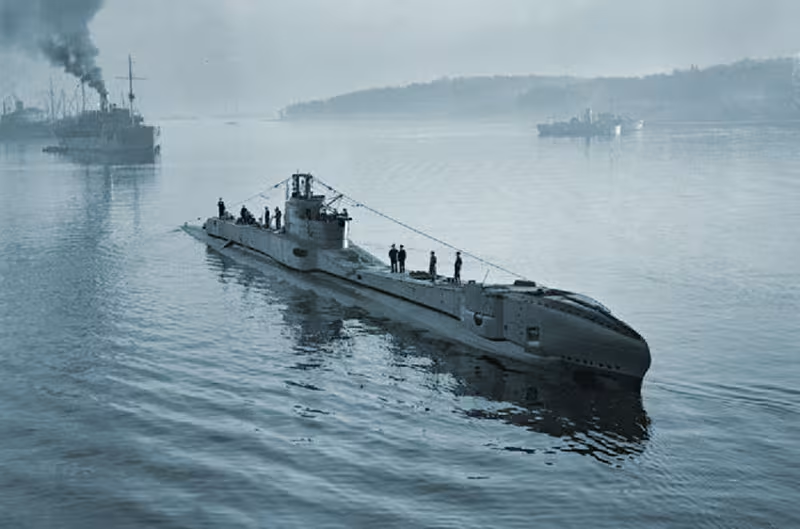
HMS Thetis was a T-class submarine of the Royal Navy built by Cammell Laird & Co. at Birkenhead. She was launched on 29 June 1938 and became famous for one of the worst peacetime disasters in Royal Navy submarine history.
The Thetis Disaster
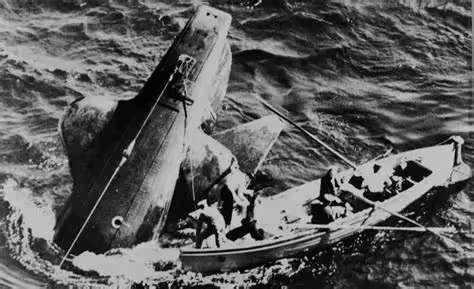
On 1 June 1939, while conducting diving trials in Liverpool Bay, Thetis carried 103 men aboard, including her normal crew, naval personnel, shipyard workers, and technical observers.
During preparations for a test dive, the crew checked whether the torpedo tubes were flooded. A test cock on torpedo tube No. 5 had become blocked with enamel paint, falsely indicating that the tube was dry. When the inner torpedo door was opened, seawater rushed into the submarine because the outer bow cap was already open.
The submarine flooded rapidly and sank bow-first to the seabed. Although the stern remained above water for some time, rescue efforts were delayed and hampered by communication and location problems. Only four men escaped alive through the aft escape chamber. The remaining 99 men died, making it one of the deadliest submarine accidents in British history.
Salvage and Rebirth
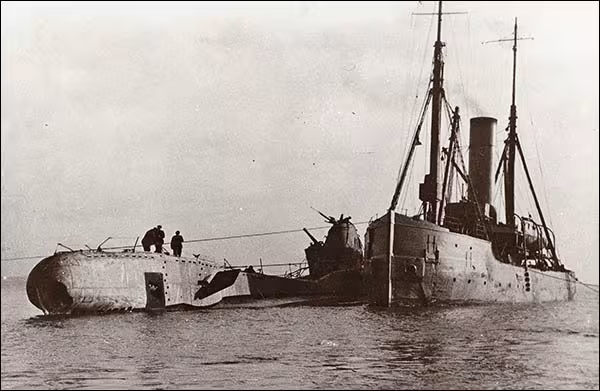
After months of salvage work, Thetis was raised from the seabed, repaired, and rebuilt. Because the name had become associated with tragedy, the submarine was recommissioned in October 1940 under a new name:
HMS Thunderbolt.
The disaster led directly to important safety improvements across British and Australian submarines. A special safety catch known as the"Thetis clip" was added to torpedo tube doors, allowing crews to check whether a tube was open to the sea before fully opening the inner hatch.
The Thetis tragedy shocked Britain just three months before the outbreak of the Second World War and remains one of the most significant submarine safety disasters ever suffered by the Royal Navy.