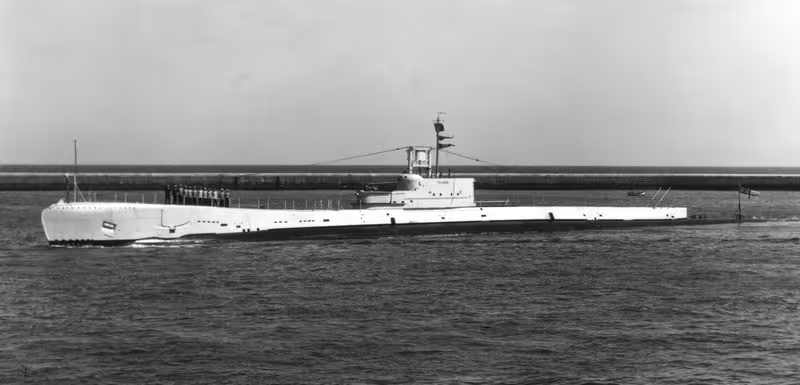
HMS Thames was a River-class submarine of the Royal Navy, built by Vickers-Armstrongs at Barrow-in-Furness. She was launched on 26 February 1932 and commissioned in September 1932.
Key Facts
- Pennant number: N71
- Class: River-class (sometimes called the Thames class)
- Length: 345 ft (105 m)
- Surface displacement: 2,165 tons
- Crew: 61 officers and ratings
- Armament: 6 × 21-inch bow torpedo tubes and a 4-inch deck gun.
Service History
After commissioning, Thames served in the Mediterranean from Malta for much of the 1930s. In August 1939 she returned to British waters and joined the Home Fleet, carrying out patrols against German U-boats, blockade runners, and surface raiders.
During the Norwegian Campaign in 1940 she operated in the North Sea against German naval forces.
Sinking of Luchs
One of Thames's notable successes came in July 1940, when she torpedoed and sank the German torpedo boat Luchs, which was escorting the battlecruiser Gneisenau from Norway back to Germany for repairs.
Loss
After that patrol, Thames disappeared. She was reported overdue in early August 1940 and is generally believed to have struck a German mine off the Norwegian coast. No survivors were found.
The boat was lost with her entire crew of around 61 men, making her one of the Royal Navy's early submarine losses of the Second World War.
Historical Note
HMS Thames was the lead submarine of the three-boat River-class consisting of Thames, Severn, and Clyde. They were among the largest British submarines of their era and were designed for long-range ocean patrols.