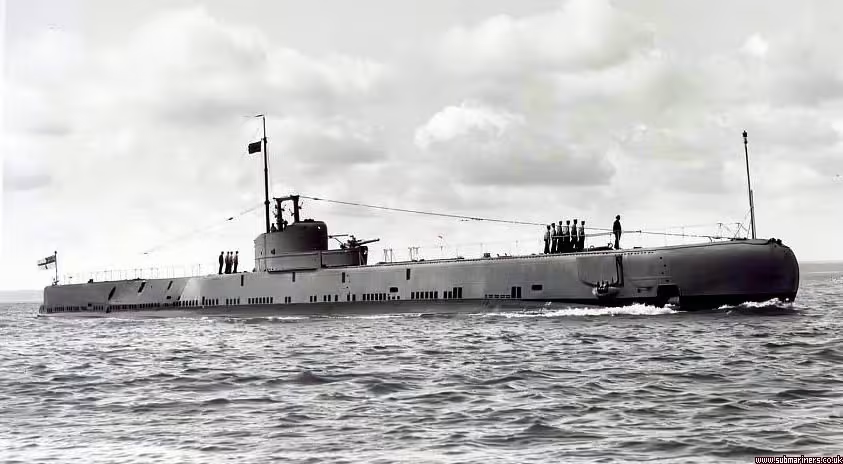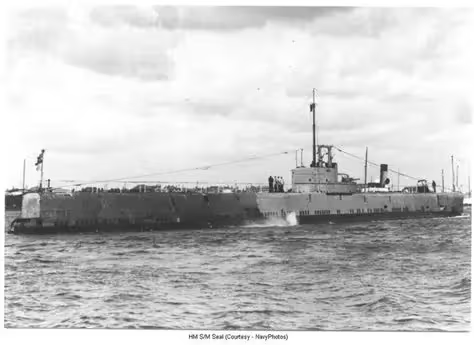
HMS Seal was a British Grampus-class minelaying submarine built for the Royal Navy in the late 1930s. She was laid down at Chatham Dockyard on 9 December 1936, launched on 27 September 1938, and commissioned on 24 May 1939 under the command of Lieutenant Commander Rupert Lonsdale.
Early Service
When commissioned, HMS Seal was intended for service in the Far East. In August 1939 she sailed from Britain toward Hong Kong, but the outbreak of the Second World War interrupted the voyage. While at Aden, she carried out patrols in the Red Sea area before returning to British waters. She later helped escort Atlantic convoys and conducted patrols in the North Sea.
Norwegian Campaign
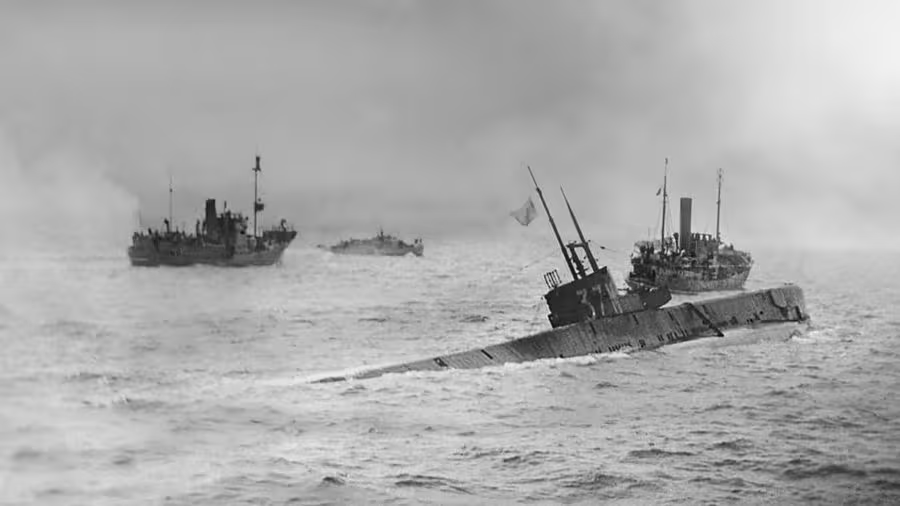
In April 1940, during the German invasion of Norway, HMS Seal was assigned to lay mines in the Kattegat, the sea area between Denmark and Sweden. On 4 May 1940, after successfully laying her mines, she accidentally struck a mine herself. The explosion caused severe damage, affecting steering, buoyancy, and the submarine's ability to dive safely.
The crew fought desperately to save the submarine. After many hours trapped underwater, deteriorating air conditions forced them to surface. Once on the surface, the damaged submarine became vulnerable to German aircraft and patrol vessels. Repeated attacks prevented escape, and with no realistic chance of saving the vessel or crew, Lt Cdr Rupert Lonsdale surrendered on 5 May 1940.
Capture by Germany
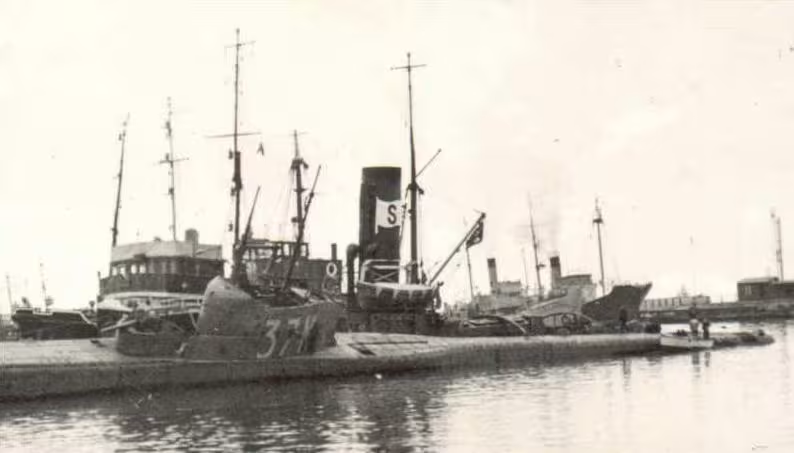
The capture of HMS Seal was unique. She became the only British submarine captured at sea by Germany during World War II. The submarine was towed to Frederikshavn, Denmark, and later to Kiel, Germany. Her crew were taken prisoner of war.
The Germans repaired her sufficiently to commission her into the Kriegsmarine as UB in November 1940. However, the submarine never saw significant operational service under German control. By 1941 she was withdrawn from active use.
Final Fate
After years of limited use, the former HMS Seal was scuttled by the Germans on 3 May 1945 near the end of the war. Her wreck remained in the Baltic region where she had originally been captured.
Historical Significance
HMS Seal is remembered for:
- Being the only Royal Navy submarine captured intact by Germany during the Second World War.
- The remarkable efforts of her crew to keep the damaged submarine afloat after striking a mine.
- Providing the Germans with valuable insight into British submarine technology and torpedo systems.
- The leadership of Rupert Lonsdale, who later became a notable prisoner-of-war and resistance figure in German captivity.
Her story remains one of the most dramatic submarine episodes of the Second World War.