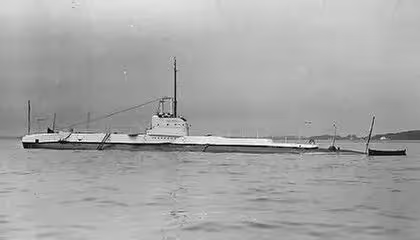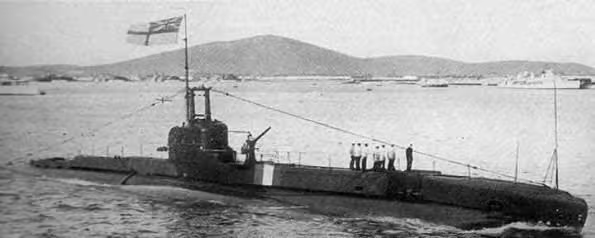
HMS Salmon was a second-batch S-class submarine of the Royal Navy, built by Cammell Laird at Birkenhead. She was laid down on 15 June 1933, launched on 30 April 1934, and commissioned on 8 March 1935.
Specifications
- Class: S-class submarine (Second Group)
- Pennant Number: N65
- Length: 208 ft 8 in (63.6 m)
- Displacement: 768 tons surfaced, 960 tons submerged
- Crew: 40 officers and ratings
- Armament: Six 21-inch bow torpedo tubes and a 3-inch deck gun
Wartime Achievements
HMS Salmon became famous early in the war when, on 4 December 1939, she torpedoed and sank the German submarine U-36 in the North Sea. This was the first U-boat sunk by a British submarine during the Second World War.
A few days later, on 13 December 1939, Salmon encountered a force of German warships and launched a torpedo attack that damaged the cruisers Leipzig and Nürnberg. She successfully escaped the ensuing anti-submarine hunt.
Another notable episode occurred on 12 December 1939, when Salmon sighted the German liner Bremen. Her commander, Lt Cdr Edward Oscar Bickford, chose not to attack because he believed the vessel was not a lawful target under the prevailing rules of war.
Loss
On 4 July 1940, HMS Salmon departed Rosyth for a patrol off the southwest coast of Norway. She failed to acknowledge several signals sent between 9 and 12 July and never returned to base. She was declared overdue on 16 July 1940.
The most likely cause of her loss was a mine, possibly in a field unknown to the Admiralty at the time, although attack by enemy aircraft has also been suggested. All 40 crew members were lost.
Salmon is remembered as one of the Royal Navy's most successful early-war submarines, particularly for sinking U-36 and damaging two major German cruisers during the first months of the war.