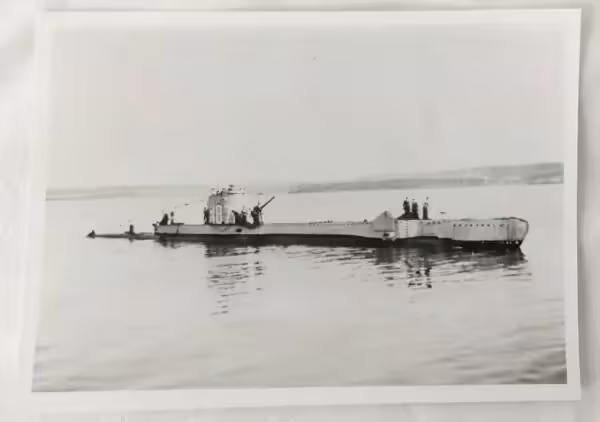
HMS P32 was a Royal Navy U-class submarine built by Vickers-Armstrongs at **Barrow-in-Furness. She was laid down on 30 April 1940, launched on 15 December 1940, and commissioned on 3 May 1941.
Service and Loss
HMS P32 sailed from Malta on 12 August 1941 to patrol off Tripoli, Libya. On 18 August she, together with HMS P33 and HMS Unique, attempted to intercept an Italian convoy bound for Tripoli. During this operation, HMS P33 was also lost, while HMS Unique later sank the merchant ship SS Esperia.
To improve her attack position, P32 attempted to pass beneath what was believed to be a moored minefield. Shortly afterward, a violent explosion occurred in the bow section. The forward compartment flooded, killing eight crew members instantly, and the submarine settled on the seabed about 15 nautical miles east-north-east of Tripoli.
The exact cause of the explosion remains uncertain:
- Early accounts suggested a mine strike.
- Later research questioned this because no confirmed Italian minefield existed at the reported position. Possible explanations include an internal torpedo-related explosion or contact with an unaccounted-for French mine laid by the submarine Nautilus in 1940.
Survivors
After the sinking, most of the surviving crew attempted to escape using breathing apparatus. Only two men successfully reached the surface:
- Lieutenant David Anthony Baily Abdy (Commanding Officer)
- Petty Officer Kirk (Coxswain)
They were rescued by the Italian motor torpedo boat MAS 528 and later became prisoners of war. A third escape attempt by ERA Martin was unsuccessful.
Discovery of the Wreck
The wreck of HMS P32 was discovered in 1999. It lies at a depth of approximately 200 feet (61 metres) east-north-east of Tripoli.
Specifications
- Class: U-class submarine
- Length: 58.2 m (191 ft)
- Surface displacement: 540 tons
- Crew: 32
- Armament:
- 4 × 21-inch torpedo tubes
- 3-inch deck gun
One of the more remarkable stories of the submarine service in the Mediterranean, HMS P32 is notable because her commanding officer survived the sinking and later provided one of the few first hand accounts of a wartime British submarine lost beneath the waters off Libya