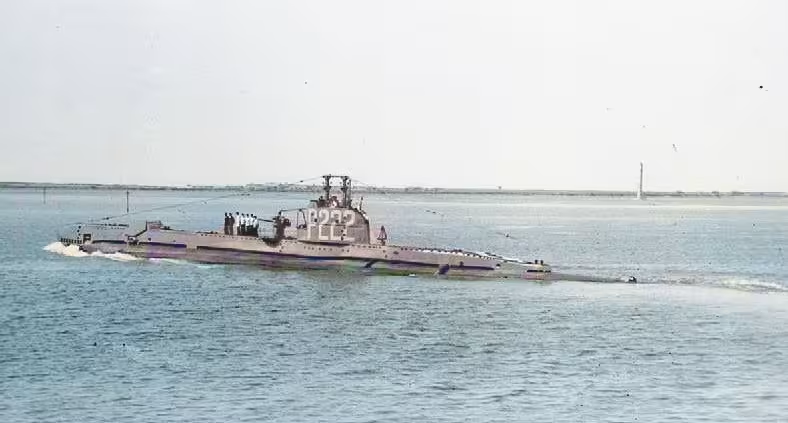
HMS P222 was a Royal Navy third-group S-class submarine built by Vickers-Armstrong at Barrow-in-Furness. She was launched on 20 September 1941 and commissioned on 4 May 1942. Unlike most Royal Navy submarines, she was lost before ever receiving a formal name and is remembered simply as P222.
Specifications
- Class: S-class submarine (Third Group)
- Length: 217 ft (66.1 m)
- Crew: 48 officers and ratings
- Armament: Six 21-inch bow torpedo tubes and a 3-inch deck gun
- Operational areas: Gibraltar and Mediterranean Sea
Wartime Service
After training in the Clyde area, P222 joined operations from Gibraltar in June 1942.
Notable activities included:
- July 1942: Intercepted the Vichy French merchant ship Mitidja off the Spanish coast. The vessel was subsequently escorted to Gibraltar.
- August 1942: Took part in Operation Pedestal, the vital convoy operation that helped relieve the siege of Malta. P222's role was to act as a visible submarine deterrent against attacks by Italian surface forces.
- Late 1942: Conducted reconnaissance of the Algerian coast before the Allied landings of Operation Torch. During these patrols she was attacked by a French patrol vessel but escaped damage.
Loss
P222 sailed from Gibraltar on 30 November 1942 for a patrol off Naples under the command of Lieutenant Commander Alexander James MacKenzie, RN. Messages were received from her on 7 December, but no further communications followed.
She failed to arrive at Algiers and was reported overdue on 21 December 1942.
The most likely explanation is that she was sunk on 12 December 1942 by depth charges from the Italian torpedo boat Fortunale, south-east of Capri, at approximately 40°29'N 14°20'E. However, this has never been conclusively confirmed.
Historical Significance
P222 is one of several Royal Navy submarines lost in the Mediterranean campaign of 1942-43. She is particularly notable because:
- She never received an official name.
- She participated in both Operation Pedestal and preparations for Operation Torch.
- Her final fate remains unconfirmed, though the attack by Fortunale is regarded as the most probable cause of loss.
Commanding Officer: Lt Cdr Alexander James MacKenzie, RN.