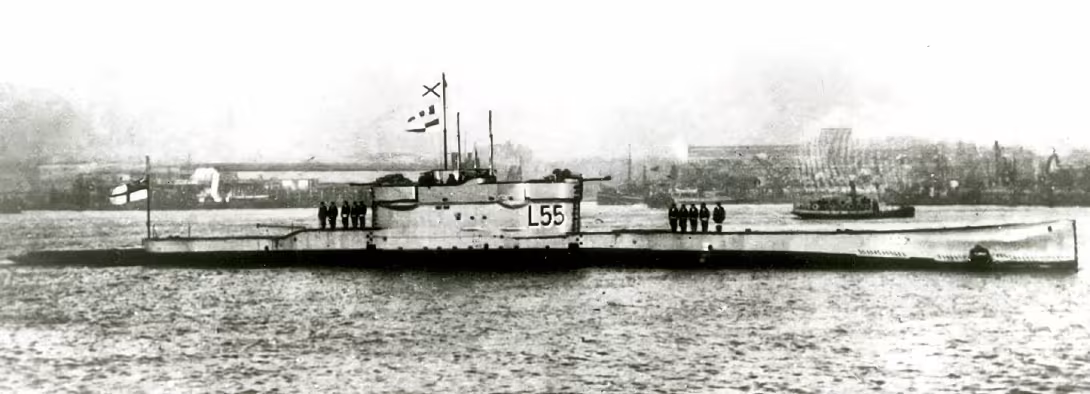
HMS L55 was an L-class submarine of the Royal Navy, built by Fairfield Shipbuilding and Engineering Company at Govan on the River Clyde. She was laid down on 21 September 1917, launched on 29 September 1918, and commissioned on 19 December 1918.
What makes L55 particularly remarkable is that she served under two navies, was sunk, raised, rebuilt, and recommissioned, and later influenced Soviet submarine design.
Service in the Baltic
Shortly after entering service, HMS L55 was deployed to the Baltic Sea as part of the Baltic Battle Squadron, supporting the Baltic states during the Russian Civil War. She operated from Tallinn, Estonia, assisting Allied efforts against Bolshevik forces.
On 9 June 1919, in Caporsky Bay in the Gulf of Finland, L55 attacked the Bolshevik destroyers Gavriil and Azard. Her torpedoes missed. During the action she entered a British-laid minefield and was lost. Soviet accounts claimed that gunfire from Azard sank her. Historians generally consider a mine strike the more likely cause, although the exact circumstances remain debated.
The submarine sank with her entire crew.
Recovery of the Wreck
In 1927, Soviet minesweepers discovered the wreck on the seabed. The Soviet Navy successfully raised the submarine on 11 August 1928, a major salvage achievement for the time.
The remains of the British crew were repatriated. Because Soviet authorities would not permit British warships into their waters, the remains were transported aboard the merchant ship Truro and later transferred to HMS Champion. The crew were buried with military honours at Haslar Royal Naval Cemetery in Portsmouth on 7 September 1928.
Soviet Service
Rather than scrap the submarine, the Soviet Union rebuilt her at Leningrad. The reconstruction reportedly cost one million roubles and was promoted as a national achievement.
She was recommissioned into the Soviet Navy on 7 August 1931 as Л-55 (L-55) and later renamed Bezbozhnik ("Atheist").
The rebuilt submarine became an important technical reference for the development of later Soviet Leninets-class (L-class) submarines. She subsequently served primarily as a training vessel.
Final Fate
L55 continued in Soviet service until the early years of the Second World War. After suffering damage in an accident, she was eventually withdrawn and scrapped sometime in the 1950s, though some sources suggest 1960 as the final disposal date.
Key Facts
- Name: HMS L55
- Class: L-class submarine
- Builder: Fairfield Shipbuilding and Engineering Company, Govan
- Commissioned: 19 December 1918
- Lost: 9 June 1919 in the Gulf of Finland
- Raised: 11 August 1928 by the Soviet Navy
- Soviet designation: Л-55 (L-55) / Bezbozhnik
- Historical significance: One of the very few Royal Navy submarines recovered and returned to service by a foreign navy.
L55 remains one of the most unusual submarines in Royal Navy history, having been sunk in combat during the Russian Civil War, salvaged by a former enemy, and then serving for decades under the Soviet flag