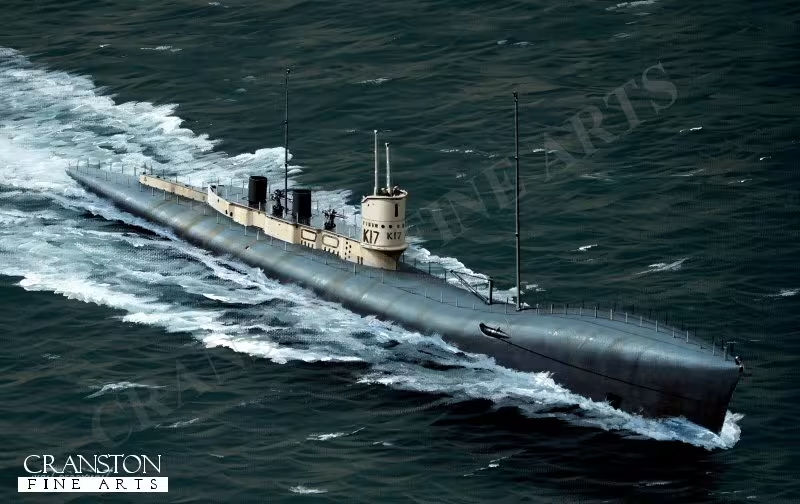
HMS K17 was a British K-class submarine of the Royal Navy, built by Vickers at Barrow-in-Furness. She was launched on 10 April 1917 and entered service later that year.
Key characteristics
- Class: K-class submarine
- Length: 339 ft (103 m)
- Complement: 59 officers and ratings
- Surface speed: Up to 24 knots, exceptionally fast for a submarine of the period because the K-class used steam turbines.
- Armament: Ten 18-inch torpedo tubes and deck guns.
Loss in the Battle of May Island
HMS K17 is best known for being lost during the Battle of May Island on the night of 31 January 1918. Despite the name, no enemy forces were involved. The disaster occurred during a large Royal Navy fleet exercise off the coast of Scotland.
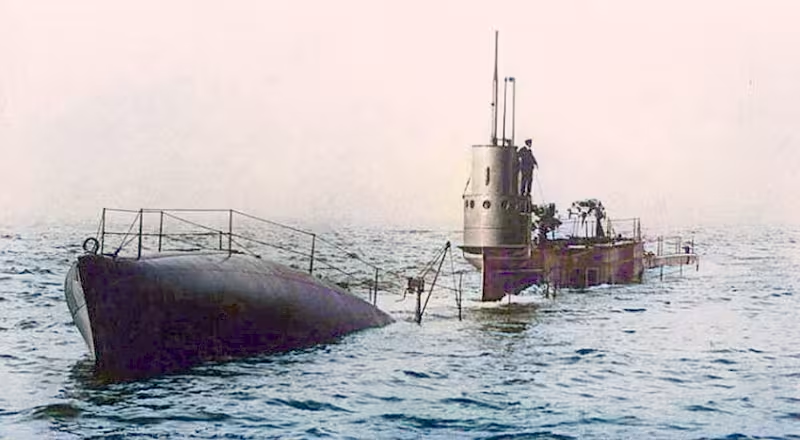
During the exercise, HMS Fearless collided with HMS K17. The submarine sank rapidly after being struck. Many crew members initially escaped into the water, but a number were subsequently killed by other vessels in the darkness and confusion.
The Battle of May Island ultimately resulted in:
- Two K-class submarines sunk (K17 and K4)
- 105 Royal Navy personnel killed overall
- Several other submarines and ships damaged
Casualties
Of K17's crew of 59, only a small number survived. The submarine's loss accounted for 48 deaths.
Wreck
The wreck of HMS K17 lies off the east coast of Scotland and is protected as a military maritime grave under UK law.
The story of K17 is often cited as one of the reasons the steam-powered K-class submarines acquired the nickname "Kalamity Class."
Connection with Plymouth
One of the survivors was Stoker 1st Class Albert Dowding, a Plymouth man. A memorial to the men lost in the Battle of May Island stands at Anstruther in Fife, Scotland