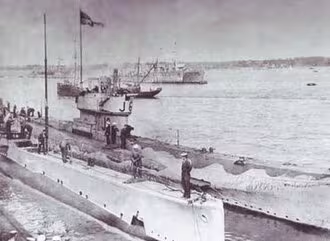
HMS J6 was a J-class submarine of the Royal Navy, built at Devonport Dockyard in Plymouth. She was laid down on 26 April 1915, launched on 9 September 1915, and commissioned on 25 January 1916. She served throughout the First World War and became one of the most famous examples of a tragic friendly-fire loss.
Service During the First World War
J6 belonged to the 11th Submarine Flotilla and operated mainly in the North Sea, patrolling against German warships and U-boats. Her first commanding officer was Max Horton, who later became one of Britain's most distinguished submarine admirals.
During her wartime service, J6 conducted offensive patrols against German naval forces. She once fired a torpedo at the German submarine U-61, although the attack missed.
In April 1918, under Lieutenant Commander Geoffrey Warburton, J6 sighted elements of the German High Seas Fleet. The fleet was not recognized as German and the sighting was not reported to the Admiralty. Historians have suggested that, had the report been made, it might have contributed to a major fleet action late in the war.
Sunk by Friendly Fire
On 15 October 1918, only weeks before the end of the war, J6 was patrolling off the Northumberland coast when she was encountered by the British Q-ship HMS Cymric.
Q-ships were disguised vessels used to lure and destroy German submarines. Cymric's commander, Lieutenant F. Peterson, mistook the identification marking "J6" on the submarine's conning tower for "U6", believing he had found a German U-boat.
Cymric raised the White Ensign and opened fire. J6 attempted to signal her true identity, but the signalman trying to hoist the recognition signal was killed by shellfire. The submarine tried to escape into fog, but Cymric resumed the attack and scored multiple hits.
After surviving crew members were seen in the water, the crew of Cymric realised the terrible mistake and began rescuing them.
Casualties
The sinking cost the lives of 15 crew members, while the survivors were rescued by the very ship that had accidentally sunk them.
A subsequent Court of Inquiry concluded that no disciplinary action should be taken against Cymric's commander because the mistake had been made in difficult wartime conditions.
The incident was so embarrassing and sensitive that details were suppressed under the Official Secrets Act for decades and were not publicly disclosed until many years later.
Discovery of the Wreck
In 2011, divers announced the discovery of J6's wreck off the coast near Seahouses, Northumberland. The find helped confirm the final resting place of the submarine nearly a century after her loss.
Key Facts
- Name: HMS J6
- Class: J-class submarine
- Builder: Devonport Dockyard, Plymouth
- Commissioned: 25 January 1916
- Commanders: Max Horton, later Geoffrey Warburton
- Lost: 15 October 1918
- Cause: Friendly-fire attack by HMS Cymric after being mistaken for German submarine U6
- Fatalities: 15 crew members
- Historical significance: One of the most notable Royal Navy friendly-fire submarine losses of the First World War.
The loss of HMS J6 remains one of the Royal Navy's most tragic identification errors, occurring less than a month before the Armistice that ended the war.