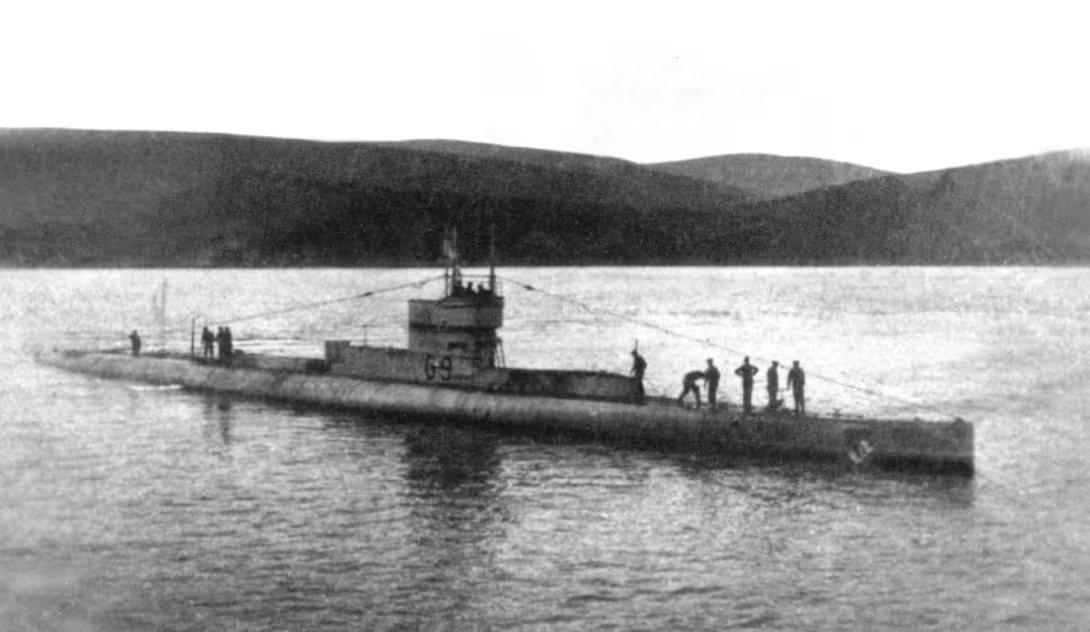
HMS G9 was a British G-class submarine of the Royal Navy, built by Vickers at Barrow-in-Furness. She was laid down on 8 December 1914, launched on 15 June 1916, and commissioned on 22 August 1916.
Specifications
- Class: G-class submarine
- Displacement: 703 tons surfaced, 837 tons submerged
- Length: 187 ft 1 in (57 m)
- Speed: 14.25 knots surfaced, 9 knots submerged
- Complement: 30 crew
- Armament: Four 18-inch torpedo tubes, one 21-inch torpedo tube, and a 3-inch deck gun.
Service and Loss
HMS G9 is best known for being lost in a tragic friendly-fire incident during the First World War. On the night of 16 September 1917, while patrolling between Shetland and Norway, her commander, Lt Cdr Byron Cary, mistook the British destroyer HMS Pasley for a German U-boat and fired torpedoes. One struck but failed to detonate. HMS Pasley, believing itself under attack, turned and rammed HMS G9, nearly cutting the submarine in two.
The submarine sank in less than a minute. Of her crew, 33 men were lost, with only one survivor, Stoker William Drake, who escaped the sinking boat and was rescued from the water. A subsequent inquiry placed no blame on HMS Pasley.
Historical Note
HMS G9 was one of eight British submarines known to have been lost through friendly fire during the First World War. Her loss remains one of the most tragic accidents in the history of the Royal Navy's submarine service.