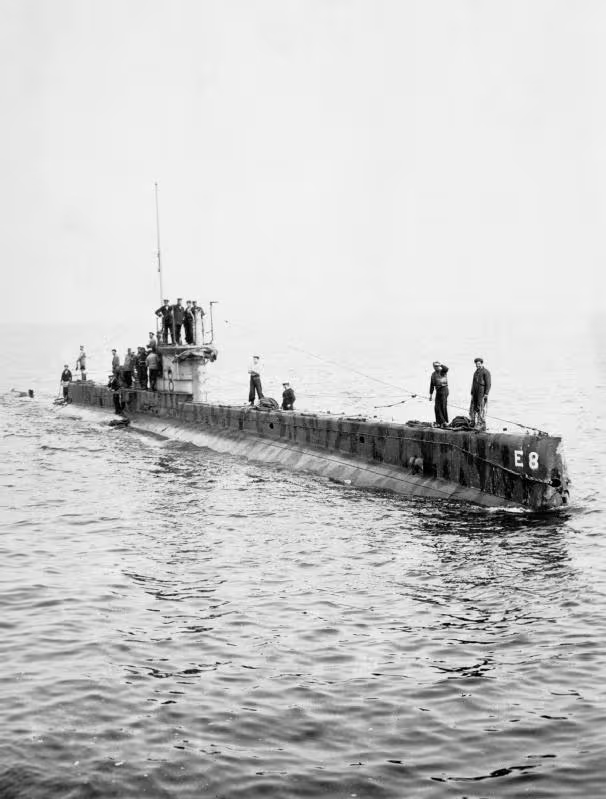
HMS E8 was a British E-class submarine of the Royal Navy, built at HM Dockyard, Chatham. She was laid down on 30 March 1912, launched on 30 October 1913, and commissioned on 18 June 1914, just weeks before the outbreak of the First World War.
Specifications
- Class: E-class submarine
- Displacement: 652 tons surfaced, 795 tons submerged
- Length: 178 ft (54 m)
- Speed: 15 knots surfaced, 9.5 knots submerged
- Crew: 3 officers and 28 men (31 total)
- Armament: 4 × 18-inch torpedo tubes (bow, beam, and stern positions)
Wartime Service
At the start of the war in August 1914, E8 served with the 8th Submarine Flotilla based at Harwich and took part in some of the Royal Navy's earliest submarine patrols in the Heligoland Bight.
She later joined the British submarine flotilla operating in the Baltic Sea, supporting Russian operations against Germany.
Most Famous Action
On 23 October 1915, under the command of Commander Francis Goodhart, HMS E8 torpedoed and sank the German armoured cruiser SMS Prinz Adalbert in the Baltic Sea, west of Libau (modern Liepāja, Latvia). The cruiser was sunk with heavy loss of life.
The sinking was a major strategic success. German naval authorities temporarily withdrew their larger warships from Baltic operations, increasing British and Russian freedom of action in the area. [rnsubs.co.uk]
For this achievement, Commander Francis Goodhart received the Cross of St. George from Tsar Nicholas II of Russia.
Fate
As German forces advanced into Finland in 1918, HMS E8 was one of several British submarines deliberately scuttled near Helsingfors (Helsinki) on 4 April 1918 to prevent capture. Boats lost alongside her included E1, E9, E19, C26, C27, and C35.
The wreck was later raised in August 1953 and scrapped in Finland.