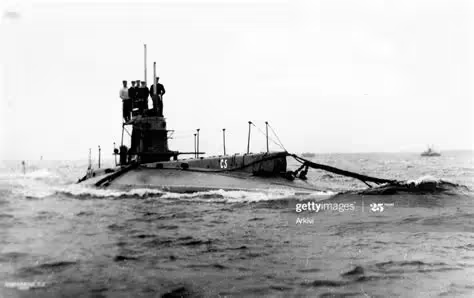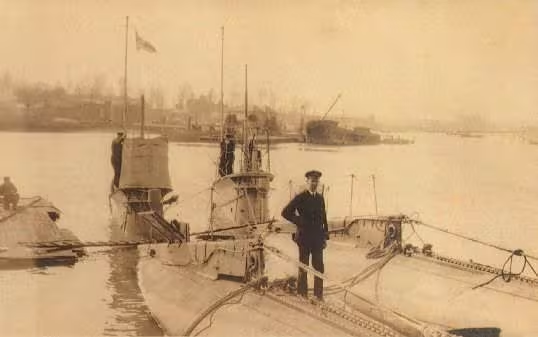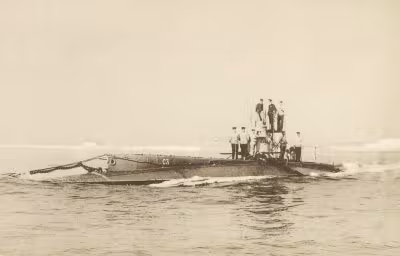
HMS C3 was a C-class submarine of the Royal Navy, built by Vickers at Barrow-in-Furness. She was laid down on 13 November 1905, launched on 3 October 1906, and commissioned in 1906, making her one of the earliest operational British submarines.
Unlike most submarines, C3 is remembered not for torpedo attacks, but for being deliberately sacrificed in one of the most daring naval operations of the First World War.
Design
HMS C3 belonged to the Royal Navy's early C-class, the final development of the Holland-type submarines. She displaced 287 tons on the surface and 316 tons submerged, carried a crew of 16, and was armed with two 18-inch bow torpedo tubes.
Powered by a petrol engine on the surface and an electric motor underwater, she could reach about 12 knots surfaced and 7 knots submerged.
The Zeebrugge Raid
By 1917 and 1918, German U-boats operating from bases on the Belgian coast were inflicting severe losses on Allied shipping. The Royal Navy devised a plan to block the ports of Zeebrugge and Ostend, hampering German submarine operations.
A crucial part of the plan involved destroying the railway viaduct that linked the Zeebrugge Mole to the mainland, preventing reinforcements from reaching the harbour. For this task, the obsolete submarine C3 was chosen.
A Submarine Turned Into a Bomb
For her final mission, C3 was packed with powerful explosives and placed under the command of Lieutenant Richard Douglas Sandford. During the night of 23 April 1918, amid the larger Zeebrugge Raid, Sandford navigated the submarine directly beneath the viaduct.
The crew set the charges, abandoned the submarine in a small boat, and escaped moments before detonation. C3 exploded beneath the structure, causing extensive damage and achieving the mission's objective.
The blast was one of the most dramatic moments of the raid and became one of the iconic images of British naval operations during the war.
Victoria Cross
For his leadership during the operation, Lieutenant Richard Douglas Sandford was awarded the Victoria Cross, the British Empire's highest award for gallantry.
Sandford later commanded HMS G11 and tragically died from typhoid fever in November 1918.
Fate
Unlike many submarines lost by enemy action or accident, C3's destruction was intentional. She successfully completed her mission and was destroyed in the explosion that demolished the viaduct. The remains were later scrapped.
Key Facts
- Name: HMS C3
- Class: C-class submarine
- Builder: Vickers, Barrow-in-Furness
- Launched: 3 October 1906
- Crew: 16 (2 officers and 14 ratings)
- Famous action: Destruction of the Zeebrugge Mole viaduct during the Zeebrugge Raid on 23 April 1918.
- Commanding officer: Richard Douglas Sandford VC
- Fate: Deliberately blown up after being rammed into the viaduct.
HMS C3 remains one of the most famous submarines in Royal Navy history because she was used as a gigantic demolition charge in a highly successful special operation, rather than in a conventional submarine attack.